We are pleased to announce that DES stills are now available to customers in Poland.
By establishing a partnership with DIGITEQ SPÓŁKA Z OGRANICZONĄ ODPOWIEDZIALNOŚCIĄ, which will serve as the authorised distributor of DES stills in the Polish market, we have taken another important step in expanding our international distribution network.
Thanks to this new partnership, customers in Poland will have easier access to information about available models, technical specifications, configuration options and purchasing conditions for DES equipment. They will also receive professional support in selecting the still that best suits their planned production, raw materials and required capacity.
A Manufacturing Tradition Dating Back to 1961
The DES story began in 1961. Over more than six decades, we have developed and refined our distillation equipment by drawing on extensive manufacturing experience, the expertise of our employees and feedback from customers around the world.
From our first traditional copper stills to modern column systems for professional distilleries, our core objective has remained unchanged: to manufacture reliable and durable equipment that provides a stable process, precise control and consistent distillate quality.
To date, DES has manufactured more than 100,000 distillation systems, and our products are available through a distribution network spanning several continents.
Quality Begins with the Choice of Materials
The quality of every DES still begins with the careful selection of materials.
We use high-quality DHP electrolytic copper with a purity of more than 99.95%, together with carefully selected stainless-steel components. Copper plays an important role in the distillation process, while robust construction and reliable joints contribute to stable operation and a long service life.
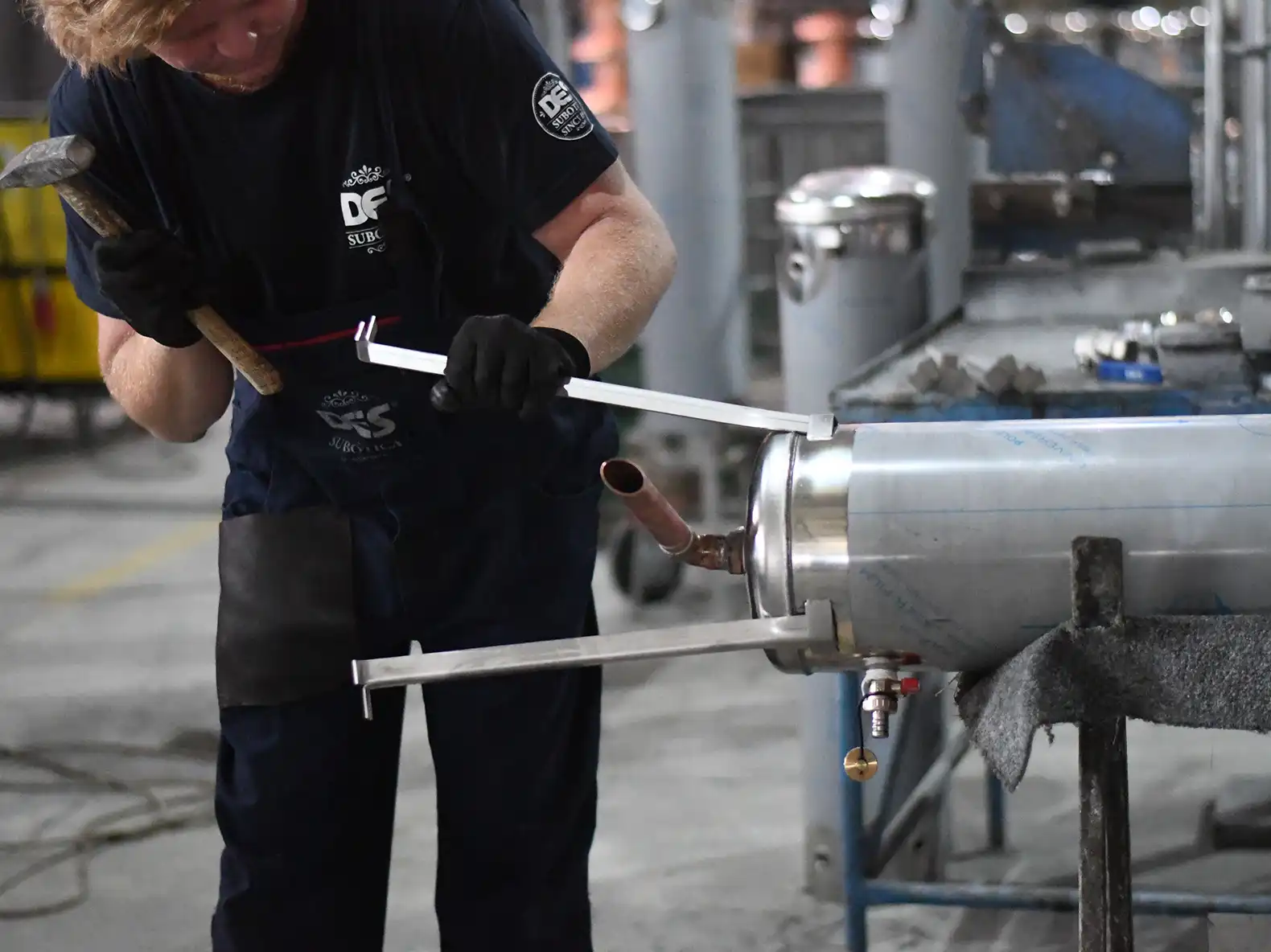
Every component of the system is manufactured with close attention to detail, from the boiler, agitator and heating system to the condenser, columns and additional equipment.
Robust construction, a functional component layout and easier cleaning and maintenance make DES stills a reliable choice for both small-scale producers and professional distilleries.
A Wide Product Range for Different Requirements
The DES product range includes a broad selection of distillation equipment, from traditional copper stills to modern, high-capacity column systems.
Traditional Stills
Traditional DES stills are designed for the classic distillation of fruit spirits and other distillates. They are available in a range of capacities and configurations, including the Hobby, Tilting, Stable, Diamond and Premium models.
Depending on the selected model and the user’s requirements, the heating method, boiler capacity and additional equipment can be customised. These stills combine traditional distillation methods, high-quality materials and construction designed for long-term use.
Performance Hobby Column Stills
Performance Hobby column stills are available for smaller producers, recipe development and limited-batch production.
They combine compact dimensions with modern technology and more precise process control. Depending on the configuration, they can support electric or gas heating, as well as the monitoring of important parameters during distillation.
Professional Column Systems
Modern column stills with capacities ranging from 200 to 6,000 litres are available for professional and industrial distilleries.
Different column types, heating systems and upgrade options allow the equipment to be adapted to the raw material, desired distillate profile and planned production volume.
The range includes solutions such as Aroma Max columns and bubble-cap plate columns, together with additional equipment for flavour infusion and process optimisation. The purpose of every DES system is to provide producers with greater control, consistent results and more efficient production.
Support for Customers in Poland
DIGITEQ SPÓŁKA Z OGRANICZONĄ ODPOWIEDZIALNOŚCIĄ will serve as the official point of contact for DES products in Poland.
Customers will be able to receive detailed information about:
- available models and capacities;
- technical equipment specifications;
- customisation options and additional components;
- delivery terms and lead times;
- quotations prepared according to specific production requirements.
Professional consultations will help customers select the right system based on the type of raw material, planned production volume, available space and preferred heating method.
Authorised DES Distributor for Poland
Company name: DIGITEQ SPÓŁKA Z OGRANICZONĄ ODPOWIEDZIALNOŚCIĄ
Telephone: +48 888 290 064
Email: seweryn@destylatorydes.pl
Website:www.destylatorydes.pl
DES Quality Is Now Even Closer to Customers in Poland
Our presence in the Polish market is further confirmation that the tradition, manufacturing quality and continuous development of DES products are recognised beyond the markets in which our company is already established.
We look forward to developing new partnerships and presenting producers and distilleries in Poland with the complete range of DES equipment, from traditional copper stills for small-scale and family producers to modern column systems designed for professional production.
For more information about available models, professional advice or a personalised quotation, please contact the authorised DES distributor in Poland.