May 19, 2026
How to Make Vodka: From Grain to Glass, a Guide for Home Distillers
May 19, 2026
What is vodka?
Vodka is a distilled alcoholic spirit that is originally colorless and neutral in taste. It is most often consumed neat, but it is also used as a base for many cocktails, such as the Vodka Martini, Bloody Mary, or Cosmopolitan. The origin of vodka is not entirely clear, but some historians believe that this distillate originated in Eastern Europe, either in Russia or Poland, in the fifteenth century, initially for medicinal purposes.
Traditional vodka is made from two basic ingredients: water and ethanol obtained by fermenting grains, such as wheat, rye, or sorghum. Many producers also use other raw materials, such as potatoes or sugar beet, and sometimes add botanical or spice ingredients to give the vodka its own character. So-called milk vodka is also increasingly appearing on the market. After fermentation and distillation, vodka is filtered and purified in order to remove impurities and achieve a smooth taste.
What is vodka made from?
A bottle of vodka is one of the simplest alcoholic beverages and is made from only a few ingredients:
Fermentable base: Most alcohol begins with an agricultural product that is fermented. Potatoes are considered one of the more traditional bases for vodka, but grains are most commonly used, such as wheat or rye. After fermentation, this base produces ethanol, a liquid alcohol that is separated from the grain residues and used for vodka.
Water: After distillation, producers add water to achieve the desired alcohol percentage. In the USA, vodka must contain at least 40% alcohol by volume, ABV, while in the European Union the minimum is 37.5%.
Additional ingredients, optional: Traditional vodka is neutral in taste, but some producers add botanicals, spices, or flavoring ingredients during or after distillation to create a specific vodka character.
How is vodka made?
Most producers follow several basic steps:
First, the basic ingredients are combined. Grains such as wheat malt, corn, or rye are mixed with water and yeast. Mixing and heating, the so-called “vodka mash”, helps everything combine and prepares it for fermentation.
Then fermentation follows. The mixture is left to stand, usually for one to two weeks, until the yeast converts the sugar into alcohol, creating ethanol and aromatic compounds.
After fermentation, the liquid is separated from the grain residues. The solid parts are discarded, while the liquid, ethanol, continues to distillation.
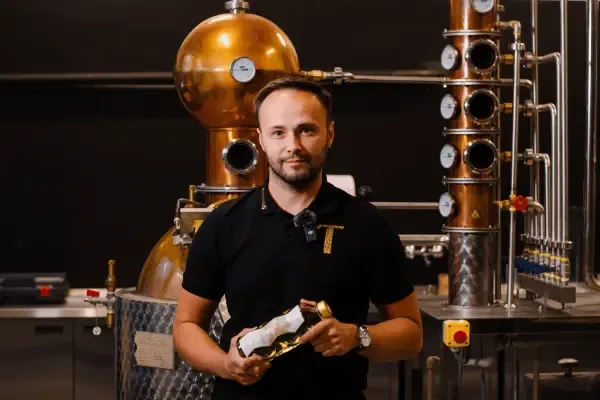
Distillation is the process of purifying alcohol by heating it and turning it into vapor, which is then condensed back into liquid. This removes impurities and increases the alcohol strength. Some producers distill once or twice, while others perform multiple distillations for a cleaner result. If they are making flavored vodka, botanicals or spices may be added during or between distillations.
After distillation, the liquid is sorted. The first 35% of the distillate, the so-called “foreshots” and “heads”, contains methanol or acetone and is usually discarded because it is toxic. The next 30% are the “hearts”, the best part. The final 35% are the “tails”, less pure, but they can be distilled again for additional product.
The next step is filtration. Traditional vodkas are smooth and neutral in taste, so they are often filtered through activated charcoal or other systems so that the final product is clean and pleasant to drink. After filtration, vodka is diluted with water to the desired alcohol percentage. Finally, the vodka is bottled and placed in labeled bottles, ready for sale and enjoyment.