May 19, 2026
La Mauvaise Graine: Lyon Gin with a Gold Medal, Produced in a DES Still
May 19, 2026
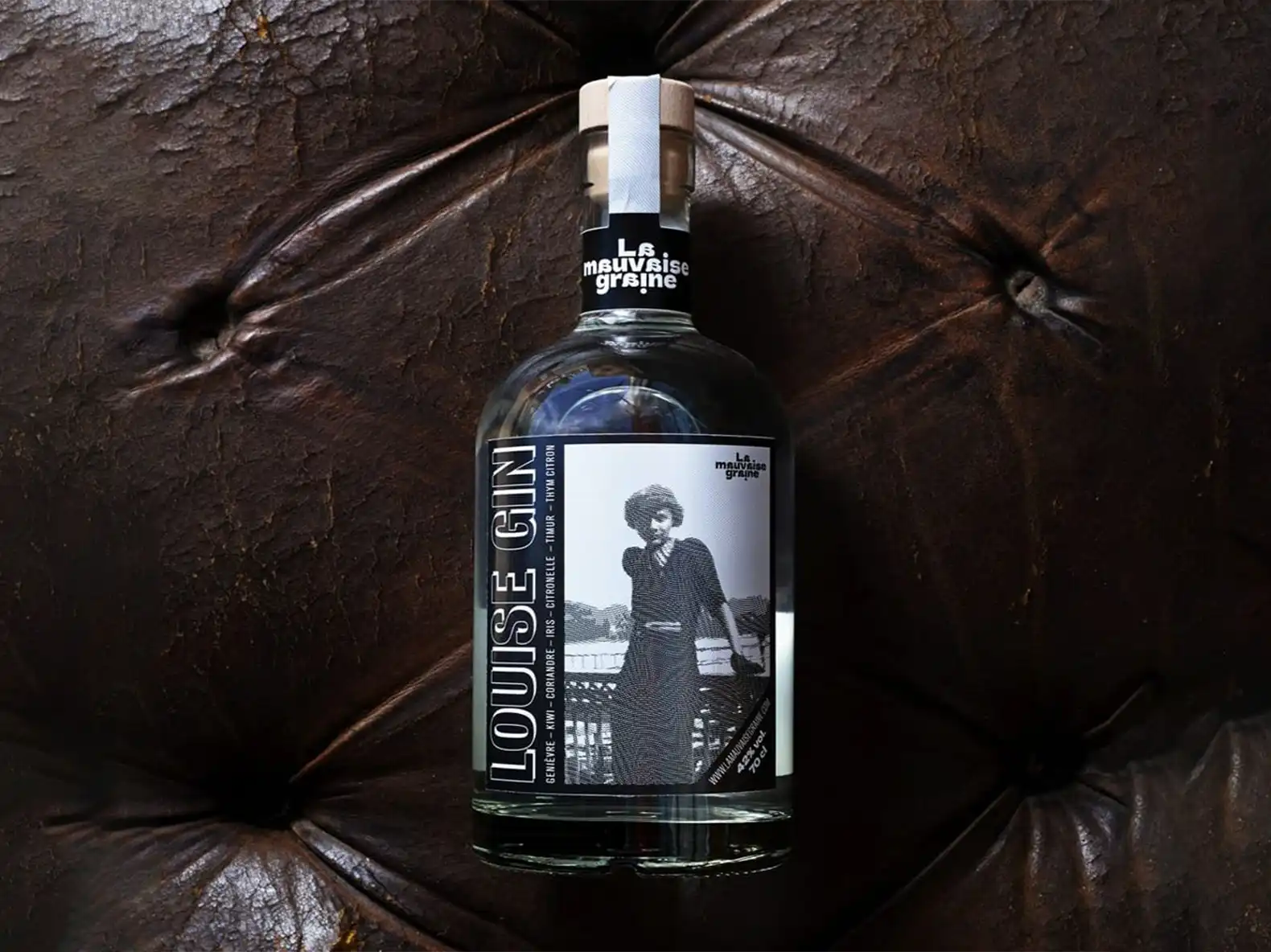
A good gin does not begin in the glass, but in the decision to carefully choose, understand, and bring together every aroma into a complete whole. In the case of Louise Gin, that path leads through Lyon, modern distillation, and a botanical profile based on freshness, natural ingredients, and precise work in the still.
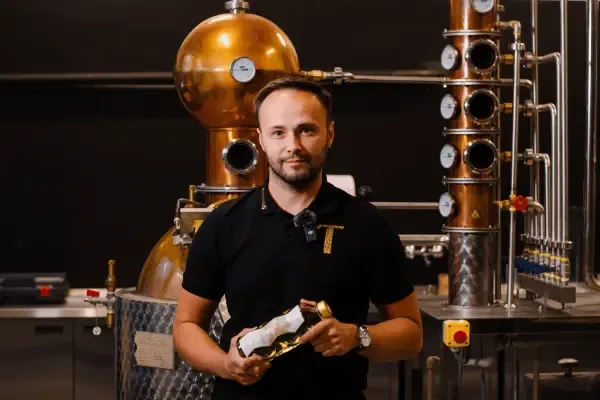
La Mauvaise Graine Distillerie produces its signature gin in the heart of Lyon, on a modern DES column still. Their Louise Gin stands out with a kiwi tincture from the Drôme region and a combination of six botanicals sourced from organic farming or wild harvesting.
Recently, this gin won a gold medal at the Concours International de Lyon, making the recognition even more symbolic. A product created in Lyon was awarded in its own city, in front of an expert environment that truly understands aroma, craft, and quality.
Gin that begins with character
La Mauvaise Graine is not a distillery that wants to make a generic gin. Their Louise Gin has a clearly defined identity and aromatic direction.
On the distillery’s official website, it is stated that Louise Gin is distilled in a column alembic in the heart of Lyon. Its distinctive character comes from a tincture of kiwi grown in the Drôme region, combined with six other botanicals sourced from organic farming or wild harvesting.
That immediately says a great deal about their approach. Here, gin is not just an alcohol base with added aromas. It is designed as a product with geography, an idea, and a clear sensory signature.
The fruitiness of kiwi brings roundness.
The botanicals provide depth.
A light bitterness and spicy finish create a character that lasts.
Lyon as the place of origin
The special value of this story lies in the fact that Louise Gin was not created far away from the audience it speaks to. It is produced in Lyon, a city known for gastronomy, a strong culture of taste, and deep respect for craft.
That is why the gold medal won at the Concours International de Lyon carries additional weight. It is not just another award. It is a confirmation of quality in both a local and international context, before an audience and expert environment that truly understands drinks, aroma, and production.
For a young or signature distillery, such recognition means a great deal. It confirms that the product is not interesting only because of its idea, but also because of the quality in the glass.
The DES still as part of the process
For gin production, especially gin based on carefully selected botanicals, equipment plays an extremely important role. A good still must enable process control, stable distillation, and precise extraction of aromatic components.
La Mauvaise Graine produces its Louise Gin on a modern DES column still. This type of equipment gives the distiller the ability to work with complex aromatic profiles, preserve the delicate notes of herbs and fruit, and achieve a clean, balanced, and repeatable result.
In gin, balance is crucial.
If the alcohol base is too harsh, the botanicals lose their elegance.
If the aromas are overemphasized, the product becomes heavy.
If the distillation is imprecise, what makes the gin recognizable is lost.
A high-quality still does not create the recipe instead of the distiller, but it gives them the control to carry out their idea exactly as they imagined it.
When botanicals have space to speak
Louise Gin is a good example of a modern approach to gin. Instead of relying only on the classic image of gin, it builds its identity through an unusual choice of botanicals and a fruit component that makes it stand out.
Kiwi from the Drôme region is not a detail added for exotic appeal. It gives the product roundness, freshness, and a different aromatic opening. Combined with botanicals from organic farming and wild harvesting, it creates a gin with a natural yet modern character.
This is what more and more modern distilleries are looking for: a product with a craft foundation, a local story, and a recognizable taste.
DES stills are made precisely for such producers, for those who want not only stable production, but also the freedom to develop their own style.
What does this story mean for future distillers?
The story of La Mauvaise Graine Distillerie shows how important it is for equipment to match the producer’s ambition.
If you want to produce gin, it is not enough to have only a good list of botanicals. It is necessary to understand how aromas behave during distillation, how balance develops, and how the result is repeated from batch to batch.
Modern column stills enable better process control, more precise work with aromas, and greater production stability. This is especially important for premium gins, where quality is measured not only by the strength of flavor, but also by purity, elegance, and finish.
DES stills are used around the world for the production of brandy, gin, absinthe, liqueurs, vodka, rum, whisky, and other alcoholic spirits. Our range includes more than 40 still models, different types of columns, several heating options, and the possibility of custom production according to production needs.
For distilleries that want to create products with character, the right still is not just a technical part of production. It is a tool that helps an idea become a recognizable brand.
Gold for a gin that carries its city
La Mauvaise Graine Distillerie shows how a modern urban distillery can combine local identity, creativity, and a serious approach to production.
From the heart of Lyon came Louise Gin, a gin with the aromatic signature of kiwi, carefully selected botanicals, and a character recognized with a gold medal at the Concours International de Lyon.
For DES, it is a special honor that our modern column still is part of this story.
Because when a distiller has a clear idea, high-quality ingredients, and equipment that enables precise distillation, the result is not just a good gin.
The result is a product with a voice, origin, and character.
Contact us and find the DES still that suits your production.