What is the difference between T1 and T2 copper, and why does it matter when choosing a brandy distillation still?
When buying a distillation still, one of the most important differences is not in its appearance, but in the material it is made from.
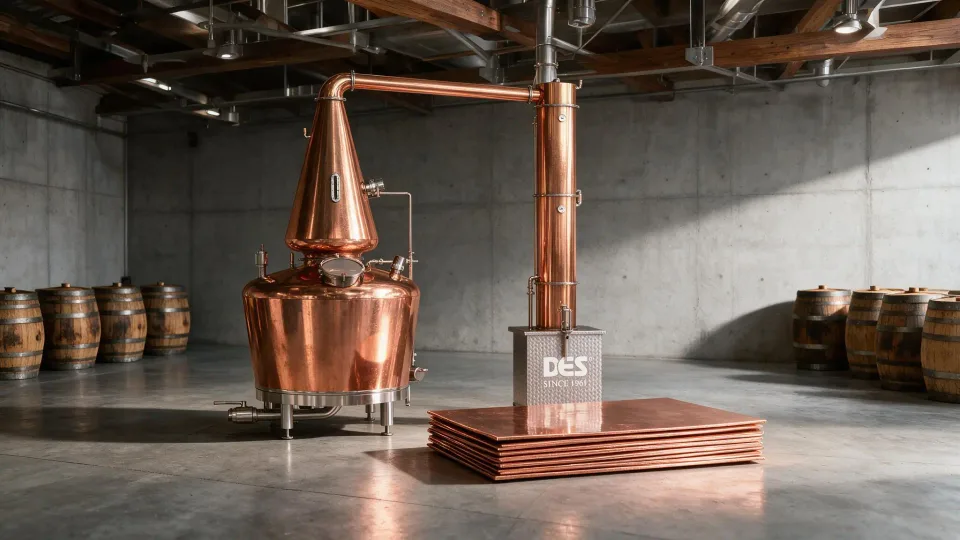
DES stills are made from European T1 copper of DHP quality, with a purity of 99.95% and higher. We choose this copper because of its consistent quality, traceable origin, strict control, and long-term reliability.
On the market, you can often find stills made from T2 copper, a material which, according to the standard, contains a lower percentage of copper and silver, most commonly 99.90%. On paper, this difference may seem small, but in a still that operates for years under high temperatures and in contact with steam, alcohol, and organic acids, the quality of the material becomes very important.
T1 and T2 copper are not the same.
T2 copper is often used in industrial production, for cables, conductors, electric motors, transformers, and similar applications. It is a material with its own purpose, but a distillation still is not an ordinary industrial product.
In a still, copper is not used only for its attractive traditional appearance. It transfers heat, participates in the distillation process, and directly affects the stability of the equipment’s operation. That is why DES does not choose a material that only meets the minimum requirements, but copper with proven origin, consistent quality, and documentation.
The difference is not only in the price of the still.
At first glance, a still made from T2 copper may seem more affordable. However, with professional equipment, true value is not measured only by the initial price.
In one specific comparative offer, the difference between a DES still and a still from overseas amounted to approximately 10% of the total investment.
For that difference, a DES customer receives:
European T1 copper of DHP quality, with a purity of 99.95% and higher
2-year warranty instead of 1 year
included installation
included operator training
shorter delivery time, up to 2 months instead of up to 4 months
direct communication with the manufacturer
faster service
more accessible spare parts
the security of knowing who to contact if support is needed
For equipment that should operate for 10, 15, or 20 years, the initial saving is not always a real saving.
Additional costs often appear later: waiting time, complicated delivery, import costs, additional installation, slower communication, production downtime, or a warranty claim that has to be resolved over a long distance.
A single serious interruption in the operation of a distillery can cancel out any initial price difference.
A DES still is an investment in reliable production.
When you choose a DES still, you are not choosing only a copper distillation unit. You are choosing a manufacturer that has been producing stills since 1961, European material, local production, professional installation, training, and support.
That is the difference between equipment that is more affordable only on paper and equipment that provides greater long-term security.
Why does DES choose T1 copper?
Because a high-quality still must start with a high-quality material.
Because distillation requires stability, precision, and trust.
Because you are not buying a still for one season, but for years of operation.
DES stills are made from European T1 copper of DHP quality, with a purity of 99.95% and higher — for producers who want equipment they can rely on.
Choose a still that starts with a better material. Explore the DES offer and find the right solution for your distillery.
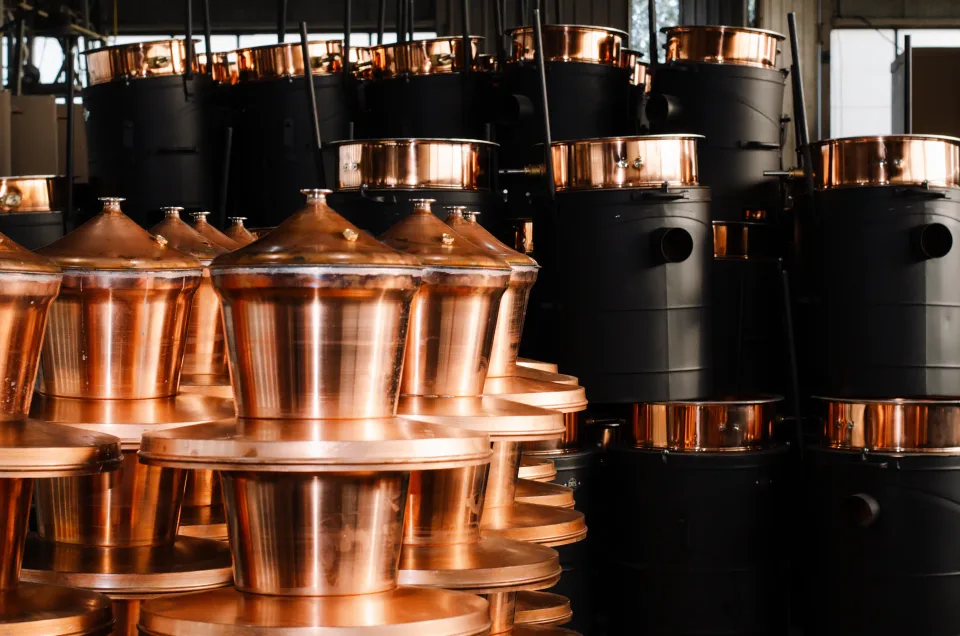
One of the first reactions customers often have when they see a finished DES still is: “How beautifully it shines.”
But that shine is not accidental. Behind it are hours of work, attention, and patience. Final finishing is one of those stages of production that the customer may not see while it is taking place, but recognizes immediately once the product is complete.
Finalizing a still is not just polishing. It is the last, very important step in which the product receives its final appearance. It is the moment when every detail, every surface, every transition, and every trace of handwork is checked.
There is no rushing in this stage. It requires a steady hand, a good eye, and great experience. Because it is precisely the finish that makes the difference between a product that is merely functional and a product that leaves an impression.
Our polishing masters, Robert and Dejan, are part of that process. Their work can be seen in every reflection of copper, in every smooth surface, and in every still that leaves our factory ready for use.
When we say that a DES still must be perfect down to the smallest detail, we mean exactly that. The details that a machine does not complete on its own. The details finished by people who love their work.
That is why the shine of our still is not just an aesthetic detail. It is proof of dedication.
One of the things we often ask ourselves is whether we should employ persons with disabilities. Less often do we ask what we gain when we do it properly.
From my experience, employing persons with disabilities does not only mean fulfilling a legal obligation, it also brings a serious change in culture. It teaches us clearer communication, greater patience, more precise agreements, less assuming, and more checking.
The work environment becomes more humane, not only for persons with disabilities, but for all employees. An organization stops being a place where things are only produced and becomes a place where people learn how to work together, despite differences.
When we talk about disability, we most often think of what is visible, moving with the help of assistive devices, visual or hearing impairment. These are realities we easily recognize, but there are also invisible difficulties.
Sometimes the challenge is slower information processing. Sometimes more repetition is needed, clearer instructions, or more time for a task to be understood and completed. In production, where pace and performance are measured, these differences can easily be misinterpreted as carelessness or lack of interest. Often, the person themselves does not have a clear understanding that it is a matter of capacity, only the feeling that they need more time, or that something is harder for them than for others, or that they have been like that since childhood.
That is why inclusion does not begin only with a ramp at the entrance. It begins with understanding, patience, and the way we communicate. True inclusion is not about everyone doing the same thing, but about everyone being given the chance to do the best they can.
One such confirmation comes when a person with a disability dares to go into another work environment… and then returns after a month or two. This year, we had two such cases. The more recent one is especially dear to me because it involves a person with hearing impairment, hardworking, capable, and work-oriented. He returned, not because he “couldn’t make it there”, but because he is recognized here.
Here, people know how to address him, to look him in the face while speaking, and that a gentle touch on the shoulder creates an emotional tone. Nuances that others may not even notice mean safety, warmth, and belonging to our colleague.
Employing persons with disabilities is not an act of kindness or pity. It is a decision to build a more stable, more mature, and healthier work environment in the long run.
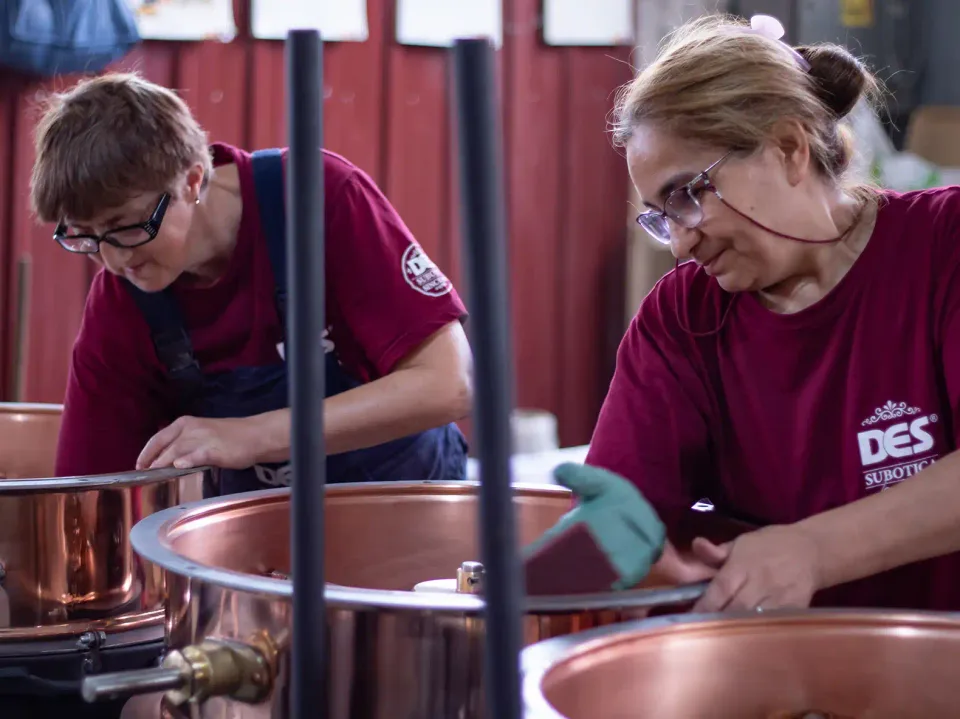
What does workplace adaptation actually mean?
At the first mention of this term, many people think of major construction work, expensive equipment, or complicated procedures. In practice, however, adaptation is much more often made up of carefully designed, concrete, and often very simple solutions that make someone’s everyday work safer and more dignified.
At DES, we learned this through experience, through conversations, observation, attempts, and constant adjustment to the real needs of the people we work with.
Over time, we realized that good adaptation does not begin with a rulebook, but with a question:
“What does this person need in order to do their job safely and well?”
Sometimes the answer is very concrete.
For our deaf colleagues, we installed mirrors in strategic places in production so they could see what was happening behind their backs. At first glance, this may seem like a small intervention. But when a person cannot hear a forklift, a colleague approaching, or a call from behind, a mirror becomes an important element of safety.
There were also situations in which colleagues themselves made special chairs and adjustable seats for a worker whose standard workstation was not suitable. They did not do this because they had to, but because they understood one simple thing: a stable and appropriate workstation is a prerequisite for a person to show their full potential.
However, adaptation is not always only about space or equipment.
Sometimes the greatest difference is made by the way we communicate.
To look a person in the face while speaking.
Not to speak with our back turned.
To check whether the person we are speaking to has understood us, instead of assuming.
To know that a gentle touch on the shoulder can be an important way to let someone know we are addressing them.
It is precisely these nuances that often make the difference between a work environment where a person merely performs tasks and one where they feel safe, accepted, and respected.
That is why it is important to say clearly:
workplace adaptation is not a privilege.
Reasonable accommodations are sometimes wrongly perceived as special treatment or as lowering standards. The essence is completely different. By removing obstacles, we enable people to show what they know, what they can do, and what they want to contribute.
Because we cannot expect everyone to run the same race if the obstacles are not the same.
Good adaptations do not lower standards.
They create more equal conditions for those standards to be reached.
Over time, at DES, we realized something else as well: adaptations do not only change the experience of a person with a disability. They also change the entire organizational culture.
When a team learns to communicate more clearly, to be more attentive, to check instead of assuming, and to understand different ways of functioning, the work environment becomes better for all employees.
Perhaps that is the greatest value of inclusion.
Not that we “helped someone”, but that through adaptation and understanding, we became a better team.
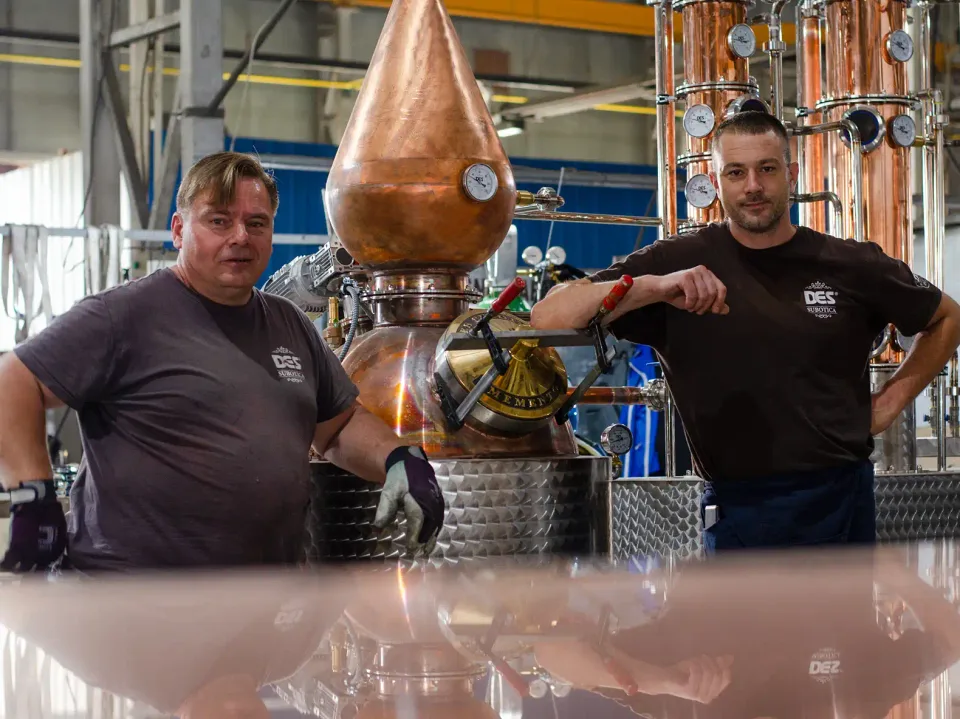
We would say that 2015 was a particularly important year for DES.
That year, a design engineer, a sales manager, a metal milling operator, two welders, and as many as four sheet metal workers joined our team. What makes this year even more significant is the fact that all of them are still part of our team today.
Ten years later, they do not only know their own jobs. They know how DES functions, they understand every part of the process, and they cooperate with one another with the confidence that comes from many years of working together.
Their experience is now woven into every segment of production, organization, and our approach to quality. They are people who know how important every detail is, how much precision, responsibility, and team spirit matter. That is exactly why they are not only employees with many years of service, but an important part of our company’s identity.
At a time when workplaces often change quickly and easily, ten years of dedication to one team, one craft, and one brand represent great value.
It says a lot about the people. But it also says a lot about the environment in which they wanted to stay. Because staying is not a coincidence. It is a confirmation of mutual trust, stability, and a culture that is built over years.
At DES, we believe that a company is not made only of products, facilities, and results. It is made of people who invest their knowledge, experience, and energy every day. And when the same people grow together with the company for more than a decade, we know that we are doing something right.
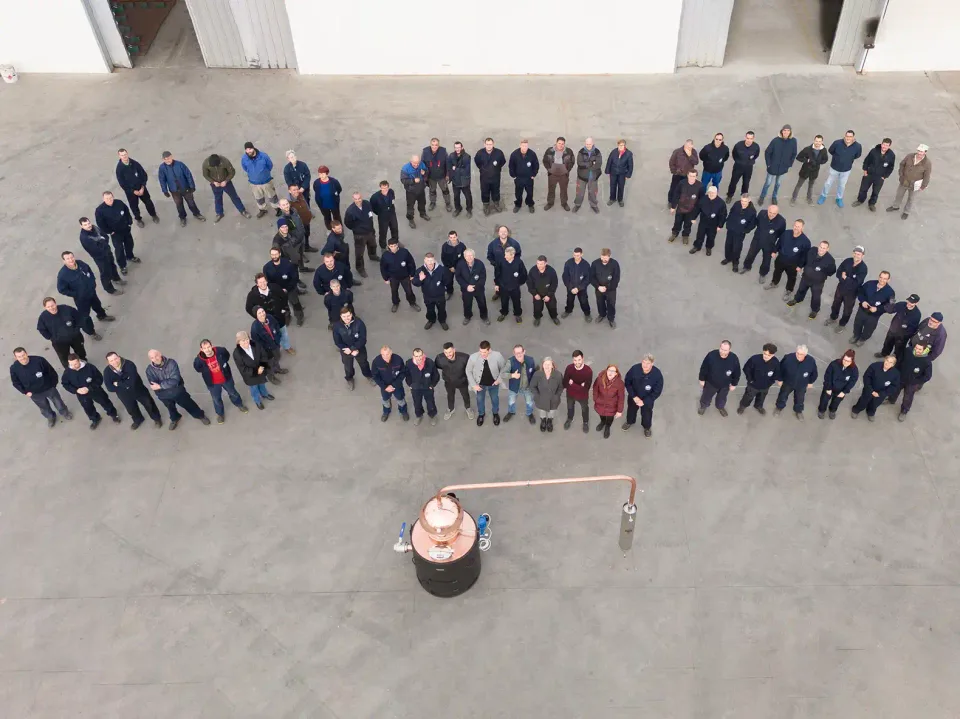
When we talk about DES stills, we most often talk about copper, tradition, quality, and durability. We talk about a product that lasts, that is passed on, that has its value and its purpose.
But behind every DES still, there is something even more important, people.
When a customer looks at a finished still, the first thing they see is its shine. They see the shape, precision, final finishing, and carefully fitted details. Still, what cannot be seen at first glance is the journey that product went through before reaching its owner.
Every still is created through a series of careful steps. It passes through the hands of craftsmen who spend years learning how copper behaves, how it is shaped, how it is preserved, and how raw material becomes a product with both function and character.
At DES, we believe that a still is not only the result of machines, tools, and a technical process. It is the result of knowledge, experience, patience, and dedication of the people who stand behind our production every day.
Every employee has an important role. Someone shapes the copper. Someone checks the details. Someone finishes the surface to a high shine. Someone, through experience, recognizes what cannot be measured only with a ruler, but with the eye of a craftsman.
That is exactly why every DES still carries more than technical quality. It carries the trace of the hands that created it. It carries the attention, time, knowledge, and responsibility of people who believe in what they do.
With this section, we want to bring you closer to the people from our production, their stories, experiences, skills, and moments that make DES what it is. Because our workers are not just part of the process. They are the heart of our production.
Without them, a still would be just a product.
With them, it becomes part of a tradition that has lasted for decades.
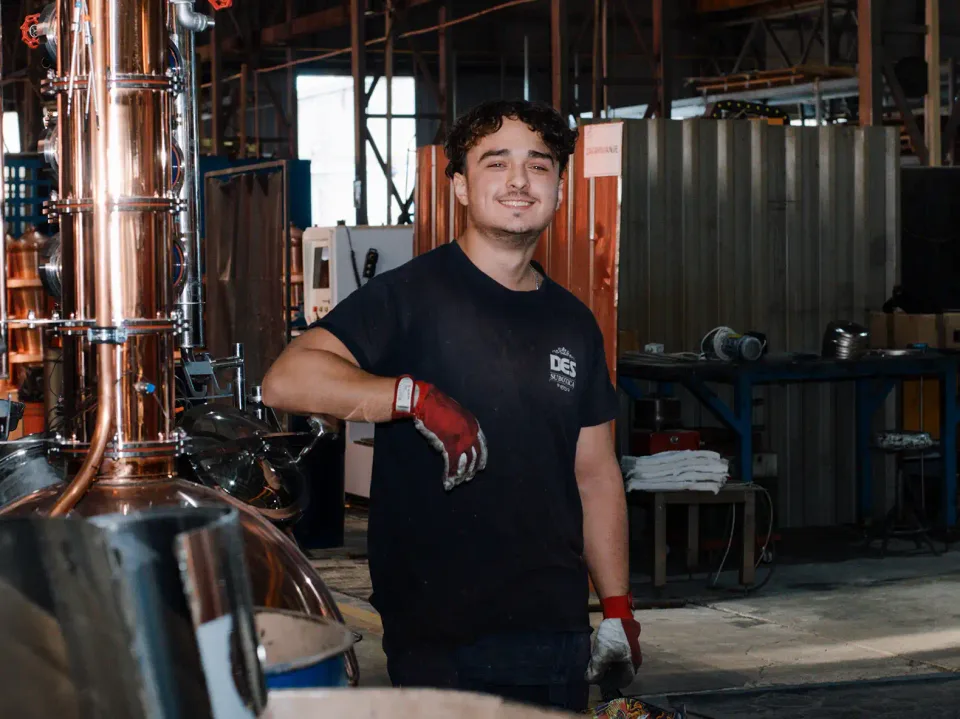
More than 70 people work in DES production. Each of them has their own role, but some people stand out especially through the energy they bring to the team.
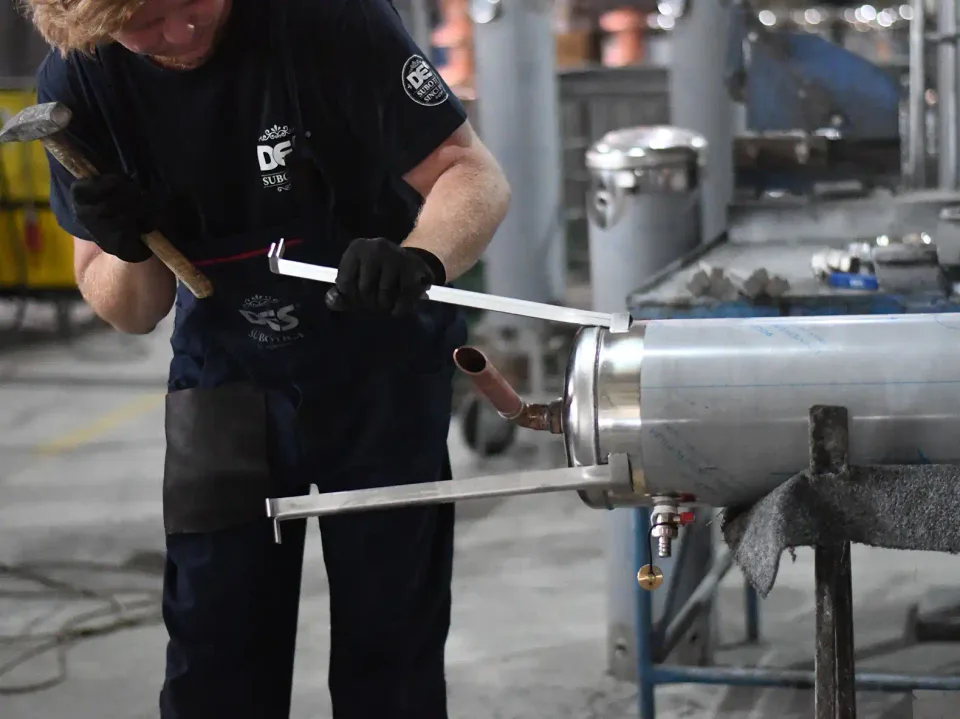
He came to DES as an 18-year-old young man, after finishing school. As a person with hearing impairment, he was looking for a work environment where he could communicate, learn, and grow. The beginning was not simple. Sign languages also differ, so Mátyás had to master not only the job, but also a new way of communicating with his colleagues every day.
But he did not give up. Step by step, he went through different work units, got to know production from several angles, and mastered numerous tasks. He learned by observing, trying, repeating, and perfecting every movement.
Today, Mátyás is practicing welding, adding another important skill to his experience. In doing so, he once again shows that a true craftsman never stops learning.
His colleagues often say about him: “Everything the eyes see, the hands make.”
That may be the most beautiful description of his talent, but it is not the only one. Mátyás is also known for his positive energy, cheerful spirit, and readiness to bring a good atmosphere into the workshop every day.
His story reminds us that success does not come all at once. It is built through curiosity, perseverance, and the desire for every new day to be an opportunity to learn something more. At DES, we believe that people like this are the heart of our production. People who grow together with the craft.
His story reminds us that success does not happen all at once. It is built every day, through curiosity, perseverance, and the desire for all of us to be better today than we were yesterday.